
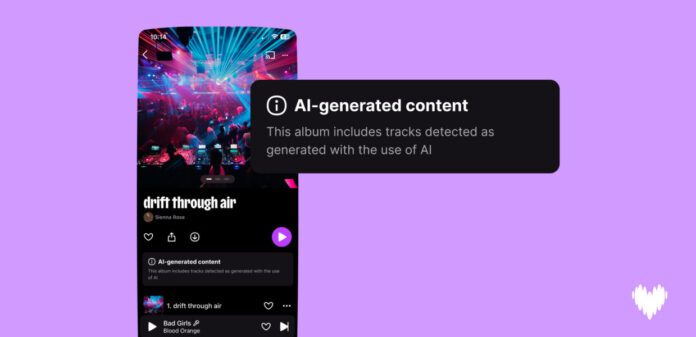
Daily deliveries of AI-generated music on Deezer have reached 90,000 tracks, representing more than 50% of new music uploads at peak level in June, 2026. In 2025, Deezer became the first streaming platform to detect, tag and exclude AI-generated music from algorithmic recommendations. Moving forward, Deezer will systematically take down AI-tracks used for streaming fraud, and those that haven’t been streamed for at least 6 months.
Deezer, the global music experiences platform, is today reporting that uploads of AI-generated tracks have, for the first time, exceeded half of all daily new music deliveries. Tracks detected as AI-generated reached its peak in June, representing more than 50% of total uploads of new music, with a monthly average of 90,000 tracks. Following this milestone, Deezer will take down generative-AI tracks used to generate fraudulent streams, as well those that haven’t been streamed for 6 months or more.
Over 13.4M AI-tracks were detected and tagged on Deezer in 2025.
“Deezer has been at the frontline of fighting fraud and reducing payment dilution related to AI music for almost two years. Now that half of all daily uploads are AI-generated tracks, we are taking additional steps to safeguard the rights of artists and songwriters, while maintaining focus on music that fans actually love,” said Alexis Lanternier, CEO Deezer. “We have reached a pivotal moment, but we have the technology to keep track of the development, and an ambition to do what’s right. If the industry can align and come together to create shared standards, we can build a healthy and sustainable music ecosystem, where great music wins.”
Deezer’s proprietary, patent pending, AI detection tool has been in place since the beginning of 2025, allowing the company to detect and exclude AI-generated music from algorithmic and editorial recommendations. In June, 2026, Deezer became the first music streaming platform to explicitly tag AI-generated music. The AI music detection tool sets an industry standard, with the ability to detect AI-generated music from the most prolific generative models, such as Suno and Udio, with the possibility to add detection capabilities for practically any other similar tool as long as there’s access to relevant data examples.
AI remains a critical challenge for the music industry, requiring both transparent labeling of AI-generated music and fair compensation for artists and songwriters whose work is used to train AI models.